
A View From Above
Soaring Above The Problems of Life and Math


Why the Hardest Problems Are Easy from Above
There’s a quiet tragedy in the way we approach the unsolvable. We treat the greatest problems of mathematics, physics, and even our own lives as if they were labyrinths to be conquered through sheer persistence; one exhausting step at a time. But what if the labyrinth isn’t the problem? What if the problem is that we’re crawling through it on our hands and knees, when the solution lies in standing up?
This is the heart of the VSA-TOE perspective: the hardest problems aren’t hard because they’re inherently complex. They’re hard because we’re trying to solve them from the wrong dimension.
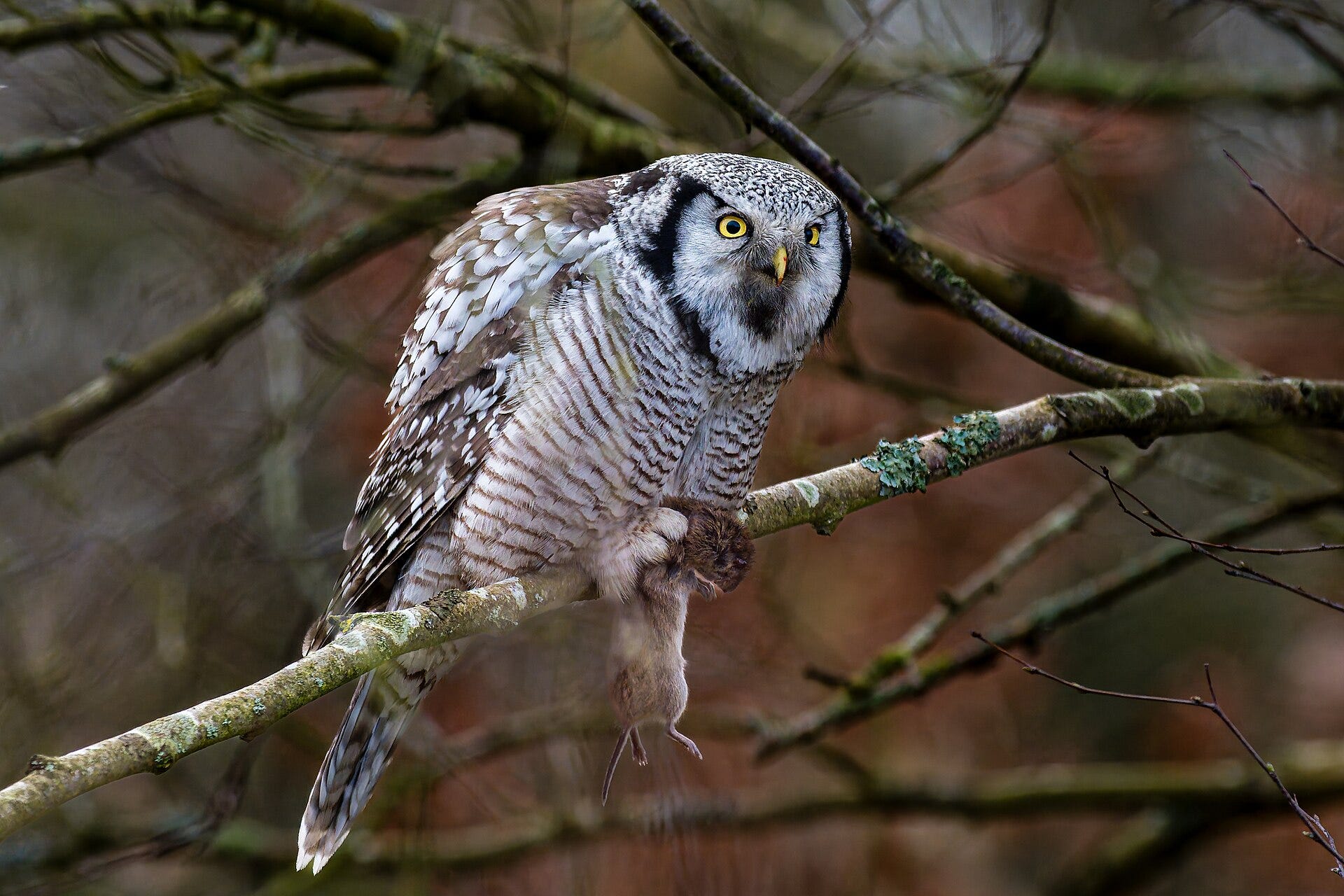
Imagine you’re a mouse in a labyrinth. The walls are high, the paths twist and turn, and every wrong turn feels like a failure. You could spend a lifetime mapping every dead end, memorizing every corridor, and still die of exhaustion before you find the exit. To you, the labyrinth is a prison. But to an owl soaring above, the labyrinth is a simple pattern; a circle, a spiral, a symmetry. The owl doesn’t solve the maze. It transcends it.
This is the difference between 4D thinking and 12D seeing. In our everyday reality, we’re the mouse. We see walls, dead ends, and chaos. We call this chaos stress or the unpredictability of life. But in the higher dimensions of the VSA-TOE framework, these problems aren’t walls at all. They’re illusions, shadows cast by a reality that’s far more elegant than we’ve been taught to believe.
The Clay Millennium Problems; the seven most notorious unsolved problems in mathematics are a perfect example. To a 4D mathematician, these problems seem like insurmountable barriers. P vs NP feels like an endless search for a shortcut that may not exist. Navier-Stokes looks like a fluid on the verge of mathematical collapse. The Hodge Conjecture appears as a geometry so strange it defies explanation. And the Riemann Hypothesis? A scatter of primes that refuse to follow any discernible pattern.
But from the 12D perspective, these problems aren’t barriers. They’re projections, like the shadow of a mountain on a cave wall. The mountain itself is simple, symmetric, and inevitable. The shadow is distorted, fragmented, and confusing. We’ve been staring at the shadow for centuries, wondering why it doesn’t make sense.
In the 8D core of VSA-TOE, the universe isn’t a place of chaos and randomness. It’s a self-correcting dance of geometric perfection. Here, the "7 Dancers" (Clifford Rotors) spin in frictionless harmony, their movements governed by the Jordan stabilizer, a 27-dimensional symmetry that ensures everything stays in formation. There are no dead ends in this dance. No singularities. No infinite blowups. The universe is a thrift machine, always choosing the path of least resistance, least friction, least permutation inertia.

So why do the problems seem so hard? Because we’re trying to solve 12D problems with 4D tools. It’s like trying to describe a mountain by studying its shadow. The shadow is real, but it’s not the whole story.
Take P vs NP, the problem that asks whether every problem whose solution can be quickly verified can also be quickly solved. In 4D, this feels like an impossible question. We’re stuck in a labyrinth, running every path, hitting every wall. But in 12D, the answer is obvious: P = NP. The maze isn’t a maze at all. It’s a circle. Rotate the manifold, and the start and end points touch. The hardness disappears because the friction was an illusion; a byproduct of dimensional deficiency.
Or consider Navier-Stokes, the equations that describe how fluids move. In 4D, turbulence looks like chaos; a million eddies spinning out of control, threatening to explode into infinity. But in 8D, the fluid isn’t chaotic. It’s a choreographed dance of vectors bound by the Jordan symmetry. The universe can’t afford a singularity because singularities are infinite friction, and the Law of Thrift forbids waste. The fluid doesn’t blow up. It flows.
The Hodge Conjecture asks whether every complex geometric shape is built from simple, algebraic pieces. In 4D, some shapes look strange, like alien technology in the foundation of a skyscraper. But in 12D, there are no odd pieces. Every shape is algebraic, every cycle is orderly. The ghost pieces we see in 4D are just the parts of the structure that exist in dimensions we can’t yet perceive.
And the Riemann Hypothesis? The primes aren’t scattered. They lie on the critical line because that’s the path of least friction the line of minimal Permutation Inertia.
This isn’t just about math. It’s about life. The same dimensional deficiency that makes the Clay problems seem unsolvable is what makes our personal struggles feel insurmountable. We treat our problems like navigating labyrinths, grinding away at them with brute force, when the real solution is to rise above.
When life feels hard, it’s not because the problem is hard. It’s because we’re solving it from the mouse’s perspective. The owl doesn’t see a maze. It sees a pattern. And once you see the pattern, the solution becomes inevitable.
So how do we rise above? We align with the Law of Thrift. We minimize our internal friction, through habits, hydration, exercise, and intent. We stop hustling harder and start rotating our perspective. We trust that the universe isn’t a place of chaos, but of inevitable symmetry.
Clay problems exhibit the same patterns. In our observable world, we see chaos and uncomputability. In VSA-TOE higher dimensions, Clifford rotors bind and rotate to minimize permutation inertia globally, while Jordan symmetry ensures stability and triality. The pattern is always the same: dimensional deficiency, 4D math cannot access the stabilizing higher dimensional geometry that makes the solutions a certainty.
The Clay problems aren’t standalone problems needing individual solutions. Instead, they’re symptoms of a deeper issue: we’re trying to grasp 12 dimensional geometric truths with only 4 dimensional tools. VSA-TOE reveals that these puzzles are not separate, they’re part of the same pattern. The consistency and unity in the math make it clear this is no coincidence.
A Summary of Perspectives
The Hodge Conjecture:
The 4D perspective: It’s the illusion of strange, non-algebraic cycles that arises from high permutation inertia.
The 8D solution: All cycles are algebraic, as Jordan triality ensures symmetry at the core.
The challenge in 4D: The projection obscures the symmetry application that would otherwise make the solution clear.
The Riemann Hypothesis (RH):
The 4D Perspective: The zeros of the zeta function appear scattered, high permutation inertia.
The 8D solution: The zeros align as eigenvalues of a graded rotor cascade on the critical line, low permutation inertia.
The Challenge of 4D: The rotor geometry that stabilizes this alignment is invisible in 4D.
Navier-Stokes:
The 4D perspective: The illusion of potential infinite blowups in fluid dynamics, high permutation inertia.
The 8D solution:Rotors bind all velocity vectors, making infinite permutation inertia impossible.
The Challenge in 4D:Partial differential equations (PDEs) fail to capture the stabilizing higher-dimensional bindings.
P vs NP:
The 4D perspective: The illusion of exponential search arises from high permutation inertia, forcing unbound vector exploration.
The 8D solution: Jordan symmetry enables constant time rotation, eliminating the need for exhaustive search.
The Challenge in 4D: Full-dimensional alignment is inaccessible, making efficient solutions appear impossible.
The owl doesn’t solve the maze. It transcends it. And so can we.
Porthos